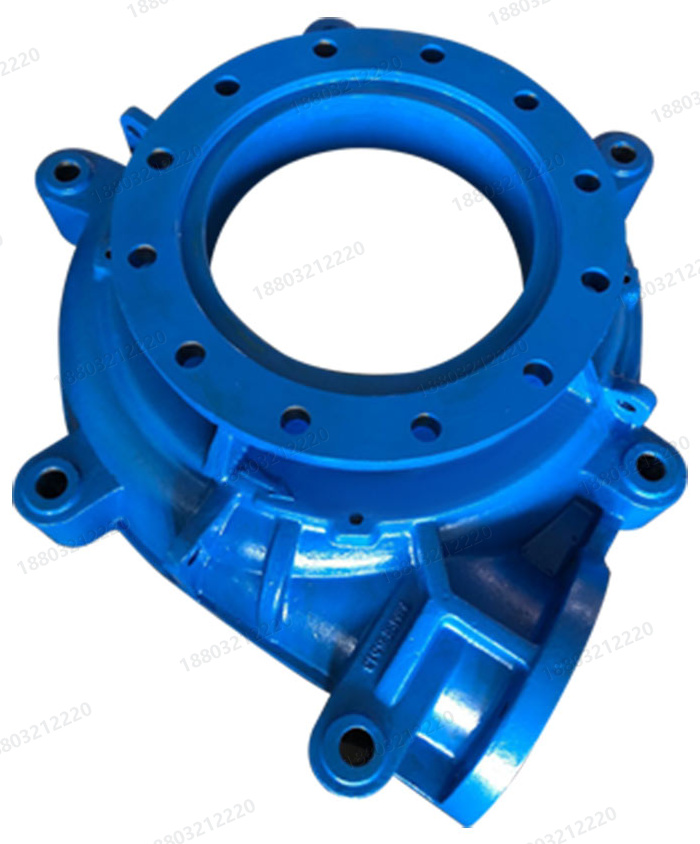
The casing is a pressure-retaining part, and slurry does not normally touch it because the liners protect the bore. Its life is therefore much longer than that of impellers and liners, unless the pump is run after a liner has worn through.
The casing also locates everything else: liner, liners and cover plate positions set the impeller clearance. A damaged joint face causes leakage and pressure loss, and is often mistaken for a seal failure.
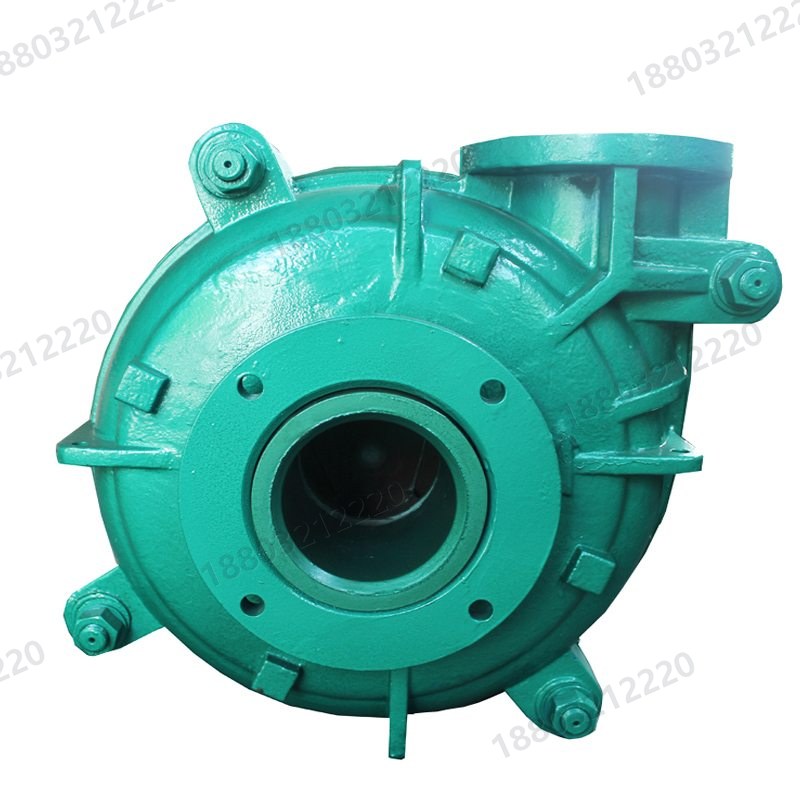
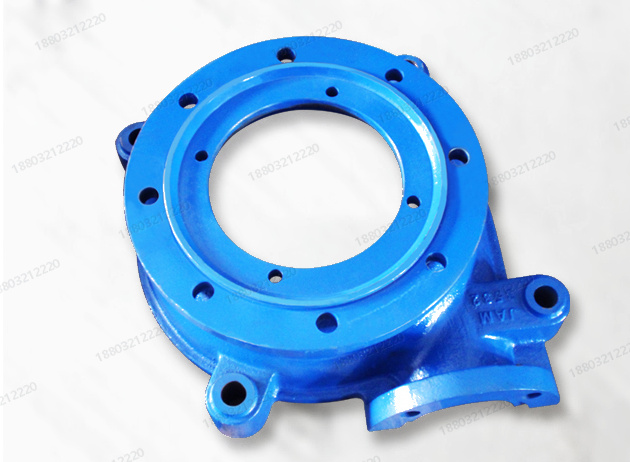
| Part / structure | Description |
|---|---|
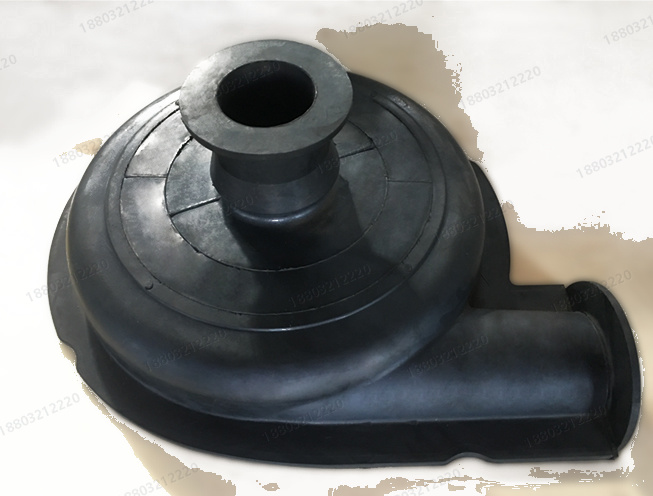
| Volute casing | Retains pressure and forms the outer volute; houses the liner |
| Cover plate | Closes the suction side and matches the liner |
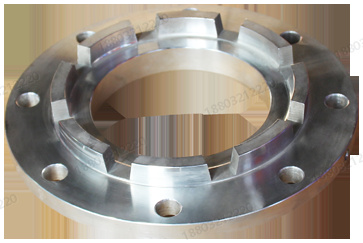
| Frame plate / stuffing box body | Connects pump head to frame and carries the seal |
| Casing gasket | Seals the casing-to-cover joint against leakage and pressure loss |
| Part | Function in the pump | Typical material |
|---|---|---|
| Pump Casing | The casing carries system pressure and locates the pump end and frame. In a double-casing pump it is the outer pressure shell; in a single-casing gravel pump it also serves as the wear body. | Ductile iron, cast steel or wear-resistant alloy; in double-casing pumps the inner surface is protected by replaceable liners. |
| Cover Plate | The cover plate closes the suction side of the pump end, connects to the suction pipe and forms the inlet passage with the front liner. | Ductile iron or cast steel, with the suction-side inner surface protected by the front liner or volute liner. |
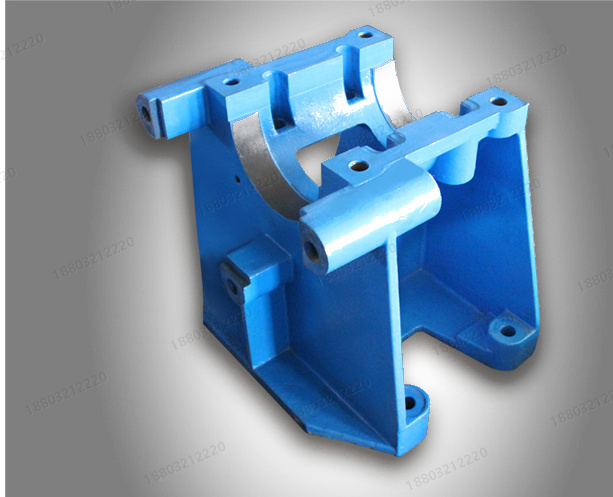
| Bearing Frame | The bearing frame supports the bearing assembly, connects the pump end to the base and carries radial and axial loads. It is normally not a wear part. | HT250 grey iron or QT500 ductile iron. |
| End Cover | End covers close both ends of the bearing housing, locate the bearing outer rings and work with oil seals to keep grease in and contaminants out. | Cast iron or steel with elastomer oil seals. |
| Front Sheath | The front sheath protects the suction-side flow area and works with the impeller eye and front liner to reduce local erosion. | High-chrome wear alloy or wear-resistant rubber according to abrasion severity. |
Common combinations; grade choice needs medium temperature, concentration and particle size.
| Duty condition | Recommendation |
|---|---|
| Liner already worn through | Check erosion depth in the casing bore; replace if beyond limit |
| Leakage at the joint | Check gasket and face flatness before blaming the casing |
| Changing liner material | Verify bore dimensions and liner outside dimensions |
| Upgrading an older pump | Assess casing compatibility with the new liner by drawing |
Model pages list construction, code explanation and chart extracts.
Each part has its own page with basic number, material and matching range.

Ductile iron, cast steel or wear-resistant alloy; in double-ca…

Ductile iron or cast steel, with the suction-side inner surfac…

HT250 grey iron or QT500 ductile iron.

Cast iron or steel with elastomer oil seals.

High-chrome wear alloy or wear-resistant rubber according to a…
Judge by wall thickness, clearance and performance, not by months in service.
No. In a double-casing pump the liners are replaced; the casing is changed only when penetrated, cracked or badly distorted.
No. Scored joint faces, distortion and uneven bolt preload also cause leakage, so the face flatness should be checked.
Dimensions may be close for the same model, but material, wall thickness and fits must be verified before interchange.
Parts are supplied by basic part number because the same name has different numbers in different frames. Send the pump model, frame code and a photo of the worn part, or the basic number directly.
We reply within one business day. You can also call +86 188 0321 2220.
Please provide the pump model, nameplate data and duty parameters by phone or email. Performance charts and manuals can be read online.